

How to Choose the Right Spray Tan Shade for Your Skin Tone
Choosing the right spray tan shade is less about deciding how dark you want to be and more about understanding what will look natural on your skin. A beautiful spray tan should complement your complexion, work with your undertones, and develop into a believable glow rather than sitting on the skin as an obviously artificial color. When the shade is chosen correctly, the result should look like your skin—just warmer, more even, and beautifully sun-kissed.
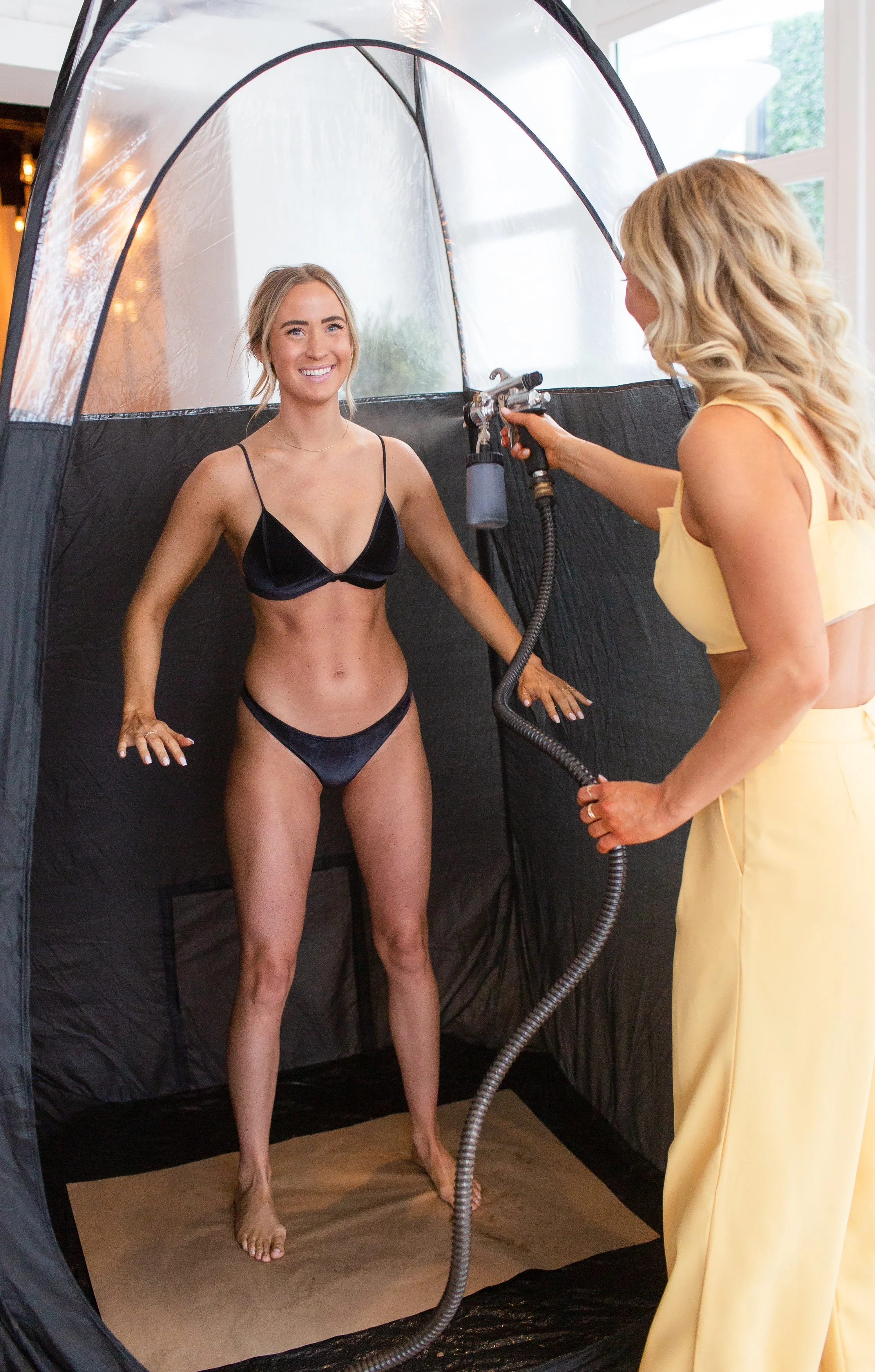
At Lets Glow Tans, we approach shade selection as part of the customization process rather than treating spray tanning as a one-formula-fits-all service. With our mobile spray tanning in Nashville, we can select from multiple professional solutions and formulas based on the client's natural coloring, desired result, and occasion. That flexibility matters because two people asking for a "medium tan" may need completely different formulas to achieve the same natural-looking depth.
Understanding how professional spray tan shades work can also help you communicate what you want at your next appointment. Here is what we consider when helping clients find their ideal glow.
Why Your Natural Skin Tone Matters When Choosing a Spray Tan
Your natural skin tone provides the starting point for every spray tan. Someone with very fair skin will generally develop and display color differently than someone who naturally has a medium, olive, or deeper complexion. The goal is not to cover your natural coloring but to enhance it.
A common mistake is assuming that choosing the darkest available formula automatically produces the best tan. More DHA—the active tanning ingredient responsible for creating the temporary color change in the outermost layers of the skin—does not necessarily mean a better result. On some complexions, an overly strong formula can create more depth than the skin can naturally support, making the final color appear less believable.
Professional shade selection is about balance. We want enough development to create the desired transformation while still allowing the finished tan to look harmonious with the client's natural complexion.
Understanding Skin Undertones
Your skin tone describes the general depth of your complexion, while your undertone refers to the subtle coloring beneath the surface. Undertones are commonly described as warm, cool, neutral, or olive, and they can influence which spray tan solution looks most natural.
Warm undertones often have golden, peach, or yellow characteristics. These complexions typically pair beautifully with formulas that enhance golden warmth without introducing excessive orange tones.
Cool undertones may have pink, rosy, red, or bluish characteristics. The right solution can add warmth while helping create a balanced result rather than exaggerating redness.
Neutral undertones contain a combination of warm and cool characteristics. These complexions can often work with several color families, giving us flexibility when selecting a formula based on the client's desired depth and occasion.
Olive undertones frequently have subtle green, golden, or neutral characteristics. Olive complexions can often support deeper tanning results beautifully, but choosing the appropriate undertone is still important for creating dimension rather than a flat or overly warm finish.
If you have never been able to determine your undertone from online quizzes, that is completely normal. Undertones can be subtle, and factors such as redness, freckles, sun exposure, makeup, and lighting can make self-assessment surprisingly difficult.
Choosing a Spray Tan Shade for Fair Skin
For naturally fair complexions, restraint often creates the most sophisticated result. A light-to-medium glow can add warmth, definition, and an even-looking finish without creating an obvious contrast between the face, hands, feet, and body.
Fair-skinned clients sometimes worry that a lighter formula will not make enough of a difference. In reality, even a relatively subtle increase in color can be noticeable on very fair skin. A professionally selected tan can create that just-back-from-vacation effect while still looking believable.
If you are fair and preparing for an important event, we generally recommend thinking about the overall aesthetic rather than simply requesting a dark tan. Consider your dress, makeup, hair color, photographs, and how much contrast you actually want. A bridal spray tan, for example, often looks best when it enhances the complexion without becoming the first thing someone notices.
Choosing a Spray Tan Shade for Light-to-Medium Skin
Light-to-medium complexions often have considerable flexibility when it comes to spray tanning. Depending on undertone and natural coloring, these clients may be able to move from a subtle golden glow to a noticeably bronzed result while maintaining a natural appearance.
This is where your desired outcome becomes particularly important. A client preparing for a beach vacation may want more noticeable warmth and depth, while someone getting photographed professionally may prefer a polished tan that primarily evens and enhances the appearance of the skin.
Season can also influence the decision. Your natural complexion may be lighter in winter and slightly deeper during summer, which means the formula that works beautifully in July may not necessarily be the ideal choice in January. Professional spray tanning should adapt to the skin you have at the time of your appointment.
Choosing a Spray Tan Shade for Olive and Deeper Skin Tones
Spray tanning is not exclusively about making skin darker. For olive and deeper skin tones, a professional sunless tan can enhance warmth, create a more even-looking finish, and add a rich, luminous quality to the complexion.
Clients with naturally deeper coloring may also be able to support higher-depth formulas without the tan appearing overly dramatic. However, undertone selection remains important. The objective is still to complement the skin rather than simply applying the strongest available solution.
A customized approach becomes especially valuable here because the desired outcome can vary considerably. One client may want subtle warmth and an enhanced glow, while another may want noticeably deeper bronzing for a vacation, photoshoot, wedding, or special event.
Your Desired Result Matters as Much as Your Skin Tone
Skin tone gives us the foundation, but your personal preference determines the direction. When choosing a spray tan, think in descriptive terms rather than focusing only on labels such as "light," "medium," or "dark."
For example, you might tell your spray tan artist that you want a subtle glow that looks completely natural, a golden vacation tan, a richer bronze for an event, or more definition without becoming significantly darker. Those descriptions provide much more useful information than simply requesting the darkest possible shade.
Reference photos can also be helpful, although they should be treated as inspiration rather than an exact formula. Lighting, filters, editing, natural skin tone, and camera settings all affect how a tan appears in photographs. A skilled spray tan artist should interpret the look you like and adapt it to your own complexion.
Why Spray Tan Solution Undertones and Formulas Matter
Not all spray tan solutions produce identical results. Professional formulas can differ in DHA concentration, cosmetic bronzer color, development time, ingredients, and undertone. This is one reason we believe custom blending is such an important part of achieving a high-end result.
Color-correcting bronzers and different solution bases can help complement various complexions. Depending on the formula, you may see violet, green, brown, golden, or other undertone influences designed to affect how the cosmetic bronzer appears and how the overall tan complements the skin.
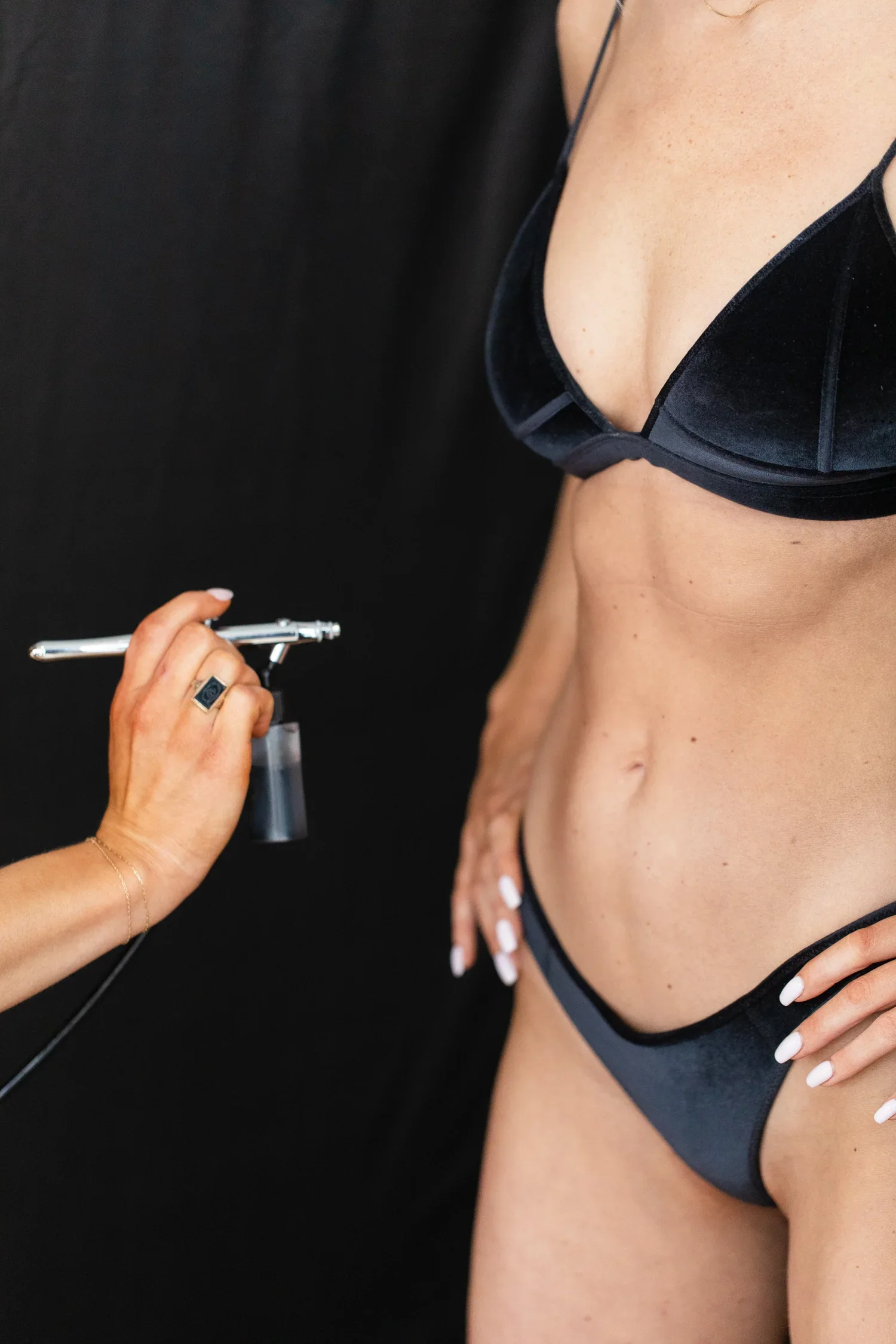
It is also important to distinguish between the guide color you see immediately after your appointment and your actual developed tan. The initial bronzer helps the artist see application coverage, but much of it washes away during your first rinse. Your true sunless tan continues to reveal itself according to the development instructions for the formula used.
That is why judging your final shade immediately after an appointment can be misleading. The color before your first shower is not necessarily the color you will have once the tan has fully developed.
Consider the Occasion Before Choosing Your Shade
The "right" spray tan shade can change depending on why you are getting sprayed. For everyday glow maintenance, many clients prefer a shade that blends seamlessly into their natural coloring and fades gradually without a dramatic difference.
Weddings often call for a polished, timeless result that photographs beautifully while still looking natural in person. Bachelorette weekends, vacations, girls' nights, and special events may inspire a client to choose something warmer or deeper. Photoshoots can have their own considerations because professional lighting can affect how skin tone and definition appear on camera.
If you are tanning for an especially important occasion, planning ahead is helpful. A trial tan before a wedding or major photoshoot can give you the opportunity to see how a particular depth and undertone develops on your skin before committing to the final event look.
Preparation Can Affect How Your Chosen Shade Looks
Even the perfect formula cannot perform at its best on poorly prepared skin. Exfoliation, shaving, skincare products, and moisture levels can all influence how evenly a spray tan develops and fades.
Dry areas such as the elbows, knees, ankles, hands, and feet can absorb tanning solution differently from surrounding skin. Proper preparation helps create a smoother canvas so that your selected shade develops more consistently across the body.
Aftercare matters just as much. Following your recommended rinse time, avoiding unnecessary exfoliation, and keeping the skin moisturized can help preserve an even-looking tan. A beautifully selected shade is only part of the equation; healthy-looking, well-cared-for skin is what makes the glow look especially refined.
Should Your Face Be the Same Shade as Your Body?
The face deserves special consideration because facial skin often behaves differently from body skin. Frequent cleansing, active skincare ingredients, exfoliation, makeup removal, and other parts of a skincare routine can cause facial color to fade more quickly.
Your face also does not necessarily need to appear exactly as dark as your body immediately after tanning. A slightly softer facial result can look natural, particularly once makeup, bronzer, and complexion products are applied.
If you use retinoids, exfoliating acids, scrubs, or other active skincare products, discuss your routine with your spray tan professional. Understanding how you care for your skin can help set realistic expectations about development and longevity.
The Best Spray Tan Shade Is the One That Looks Like You
Ultimately, choosing the right spray tan shade is not about following a universal shade chart. It is about combining your natural skin depth, undertone, desired result, skincare habits, and occasion to create a customized finish.
A professional spray tan should work with your skin rather than against it. When the formula, depth, preparation, and aftercare are all considered together, the result is a more natural-looking, dimensional glow that feels completely personal to you and your skin.